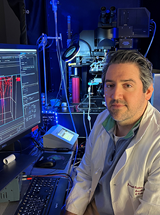
 Joseph Cichon, MD, PhD
is dedicated to understanding how powerful, rapid acting anesthetics, such as ketamine, alter neuronal circuits in healthy individuals and neuropsychiatric diseases. His basic science approach spans neuroscience, psychiatry, and anesthesia with the hope that some of these mechanistic insights will motivate improved strategies for anesthesia and treatment of challenging neuropsychiatric diseases.
Check out Joe's exciting research.
 Roderic G Eckenhoff, MD uses innovative chemical biological tools to reveal new anesthetic targets, and mechanisms of their modulation and contribution to the complex state of anesthesia.
Ongoing research in the Eckenhoff Lab.
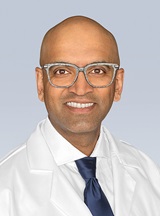 Thomas T. Joseph, MD, PhD uses computational biophysics and molecular dynamics simulation to study anesthetic mechanisms.
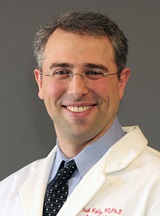
Max B Kelz, MD, PhD uses advanced ex vivo and in vivo approaches to study cellular and network interactions that underlie both the anesthetic state, and the transitions between states of anesthesia and wakefulness.
Learn about research being done at the Kelz Lab
 Renyu Liu, MD, PhD is interested primarily in the molecular pharmacology of opioids, specifically kappa agonists, and their potential use for neuroprotection.
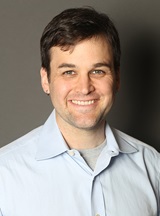
Andrew McKinstry-Wu, MD uses sophisticated optical and chemical approaches to reveal the mechanisms by which alpha-2 agonists produce sedation.
Check out the research in the McKinstry-Wu lab.

Alex Proekt, MD, PhD uses electrophysiology and advanced statistical approaches to understand how the brain “reboots” during emergence from anesthesia.
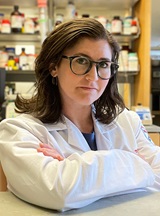
E. Railey White, MD, PhD uses chemical biological tools to understand the mechanisms of anesthetic action with a focus on the non-anesthetic effects of anesthetics.